
Bone Grafting for Dental Implants · La Mesa, San Diego
Horizontal Bone Ridge Augmentation in San Diego
When your jawbone is too narrow for dental implants, Dr. Cvetan Mechev, DDS can rebuild the width. He uses the computer-guided Safecut technique and 100% of your own bone — backed by 26 years of experience at La Mesa Dental Center.
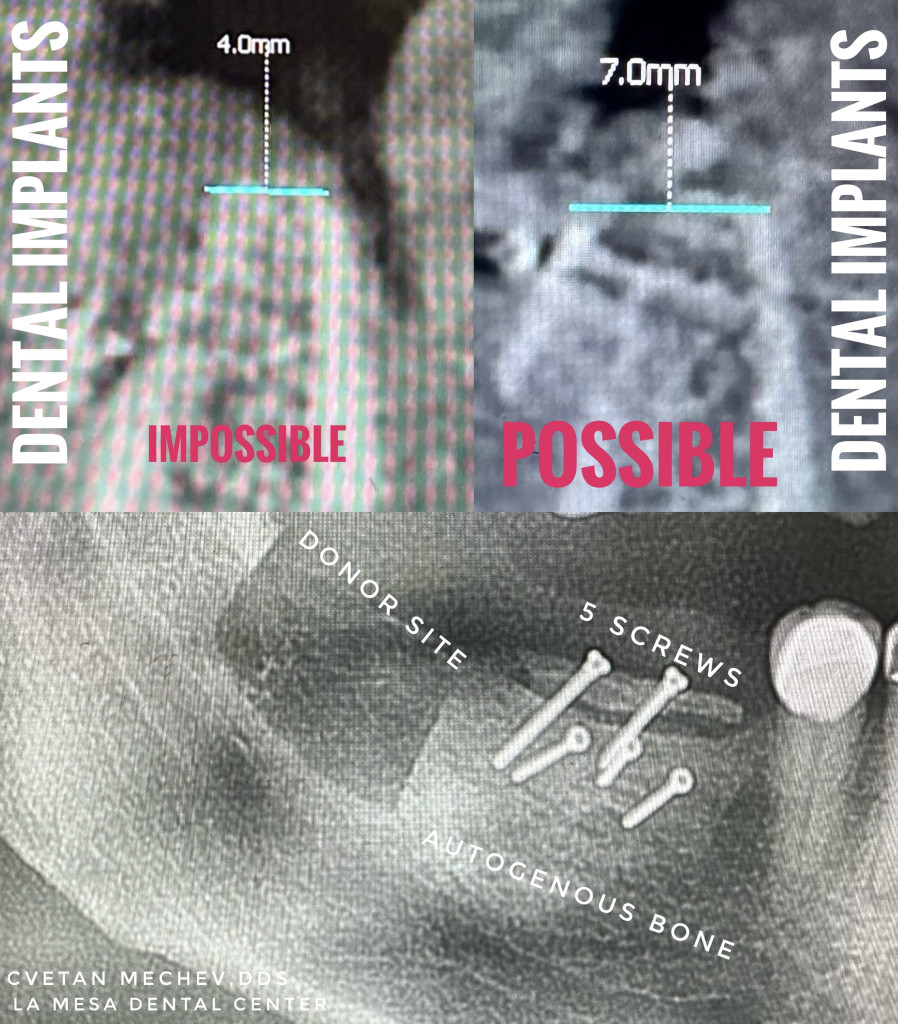
What Is Horizontal Bone Ridge Augmentation?
Horizontal bone ridge augmentation — also called horizontal ridge augmentation or horizontal bone grafting — rebuilds lost width in the jawbone. Long-term gum disease or a missing tooth can cause the ridge to shrink inward until it’s too thin to hold a dental implant safely.
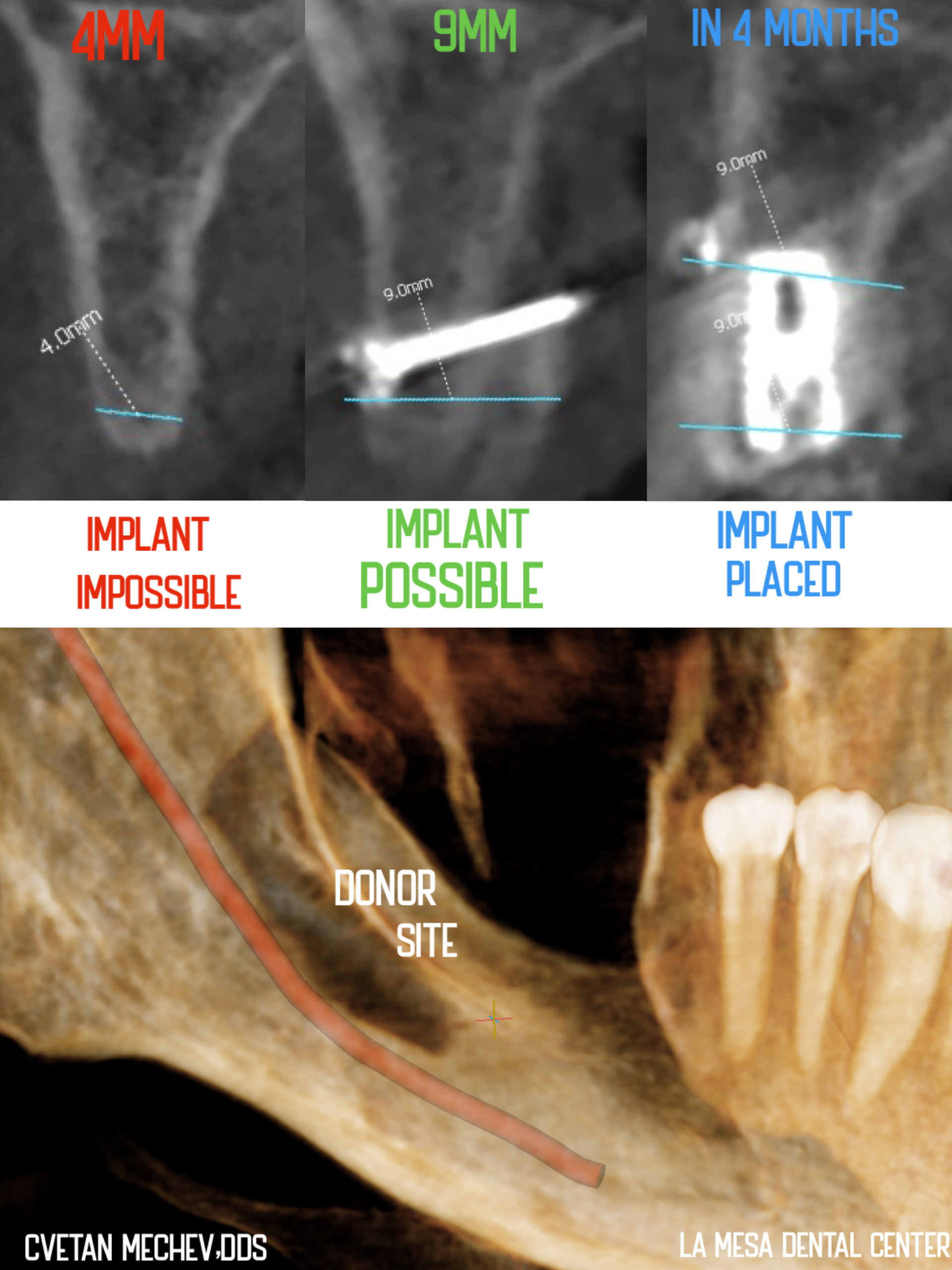
Dr. Mechev takes a small block of your own bone from the area behind the lower molars — from the area where your wisdom teeth used to be. He shapes it, packs it against the deficient ridge, and secures it with fixation screws. Over the next 4 months, your body turns the graft into solid, living bone. Once the ridge is at least 7 mm wide, a dental implant can be placed on a stable foundation.
This procedure is part of our large volume bone augmentation for dental implants series — real, documented cases with before and after CBCT measurements you can see below, alongside our vertical bone grafting cases.
Trained at the Highest International Level
Dr. Mechev completed advanced bone grafting training in four cities:
- Dubai (UAE)
- London (UK)
- Padua (Italy) — twice, under Dr. Luca De Stavola
- Budapest (Hungary)
He’s one of the only dentists in San Diego and California who trained twice in Italy (Padua, Verona) under Dr. Luca De Stavola, learning the Safecut method — a computer-guided way to take bone from one part of the jaw and use it to rebuild another area before placing a dental implant. This training covers both widening a thin jaw (horizontal grafting) and building up a short jaw (vertical grafting).
Patients travel from across Southern California — and even from Arizona and Nevada — for this level of bone grafting expertise.
Why Patients Choose Horizontal Bone Grafting at La Mesa Dental Center
Computer-Guided Safecut Technique
Safecut is a computer-guided surgical approach. The bone cuts are planned digitally before surgery, so the harvest is precise, safe, and predictable.
100% Your Own Bone
Our documented horizontal cases use 100% autogenous bone — your own living bone. No cadaver, animal, or synthetic material is needed for the graft itself.
A Comfortable Donor Site
The bone comes from the area behind the lower molars. The site is easy to access, hidden from view, and heals fully in about 6 months.
A Stable Base for Implants
Implants need enough bone to last — at least 7 mm of ridge width. Rebuilding the width first protects your implant investment for the long run.
In-House CBCT Imaging
Every case is planned and verified with our own CBCT scanner. You see exact before and after bone measurements, not estimates.
One Doctor, Start to Finish
Grafting, implant placement, and the final crown all happen in one office, with one doctor who knows your case — no referrals across town and no need to deal with multiple dentists and dental labs.
How Horizontal Bone Augmentation Works
- CBCT scan and digital planning. A 3D CT scan maps your bone width to a fraction of a millimeter.
- Computer-guided bone harvest. Using the Safecut technique, Dr. Mechev takes a thin block of bone from the area behind the lower molars.
- Graft placement. The bone is packed against the narrow ridge to rebuild width and secured with fixation screws.
- Healing. The grafted site heals in 4 months. The donor site heals fully in about 6 months.
- Implant placement. With the ridge rebuilt to at least 7 mm, your dental implant is placed on solid bone.
Documented Result: 4mm to 9mm — Implant Placed
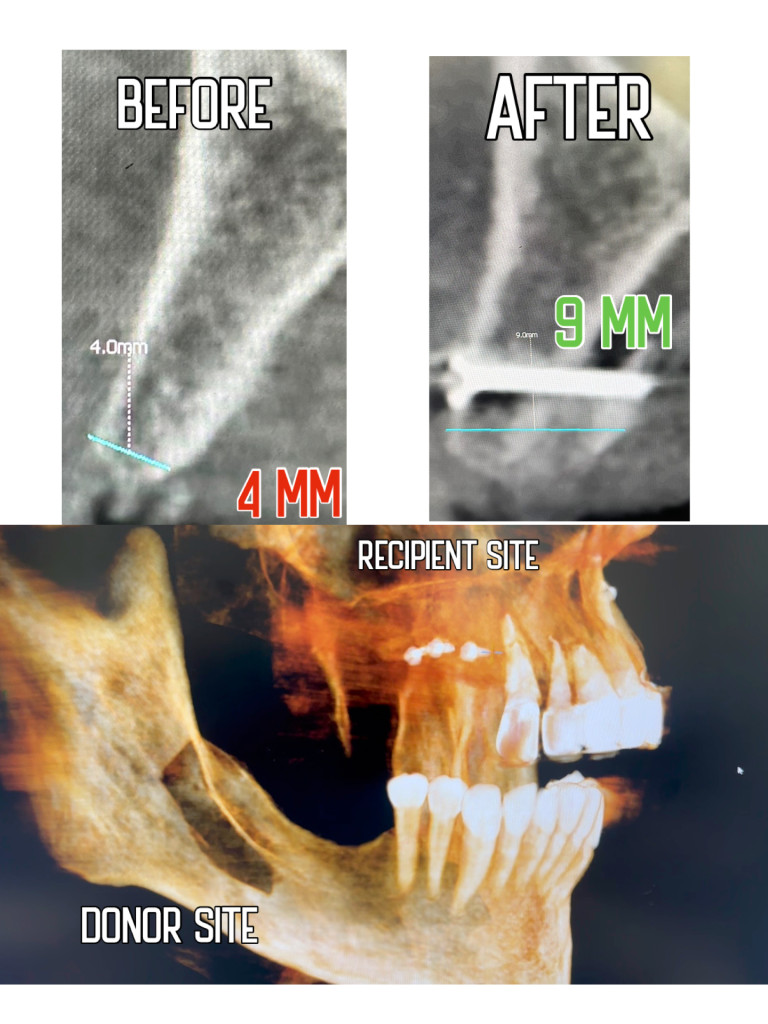
Ridge width rebuilt from 4 mm to 9 mm using 100% autogenous bone, with the dental implant placed 4 months later.
Read Case #7: Horizontal Bone Augmentation — Implant Placed →
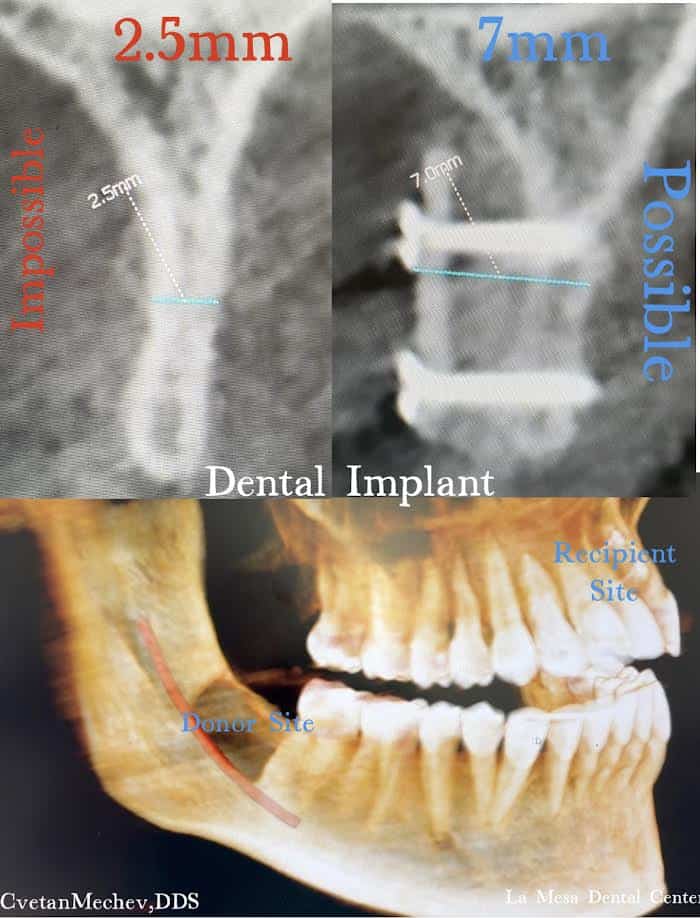
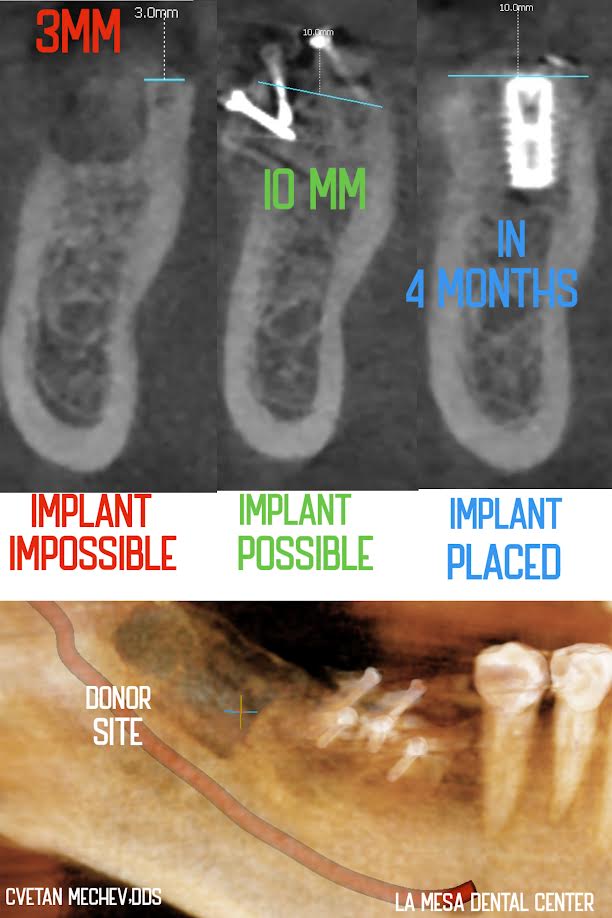
Documented Result: 2.5mm to 7mm
Ridge width rebuilt from 2.5 mm to 7 mm using 100% autogenous bone.
Horizontal Bone Grafting Cases — Large Volume Bone Augmentation Series
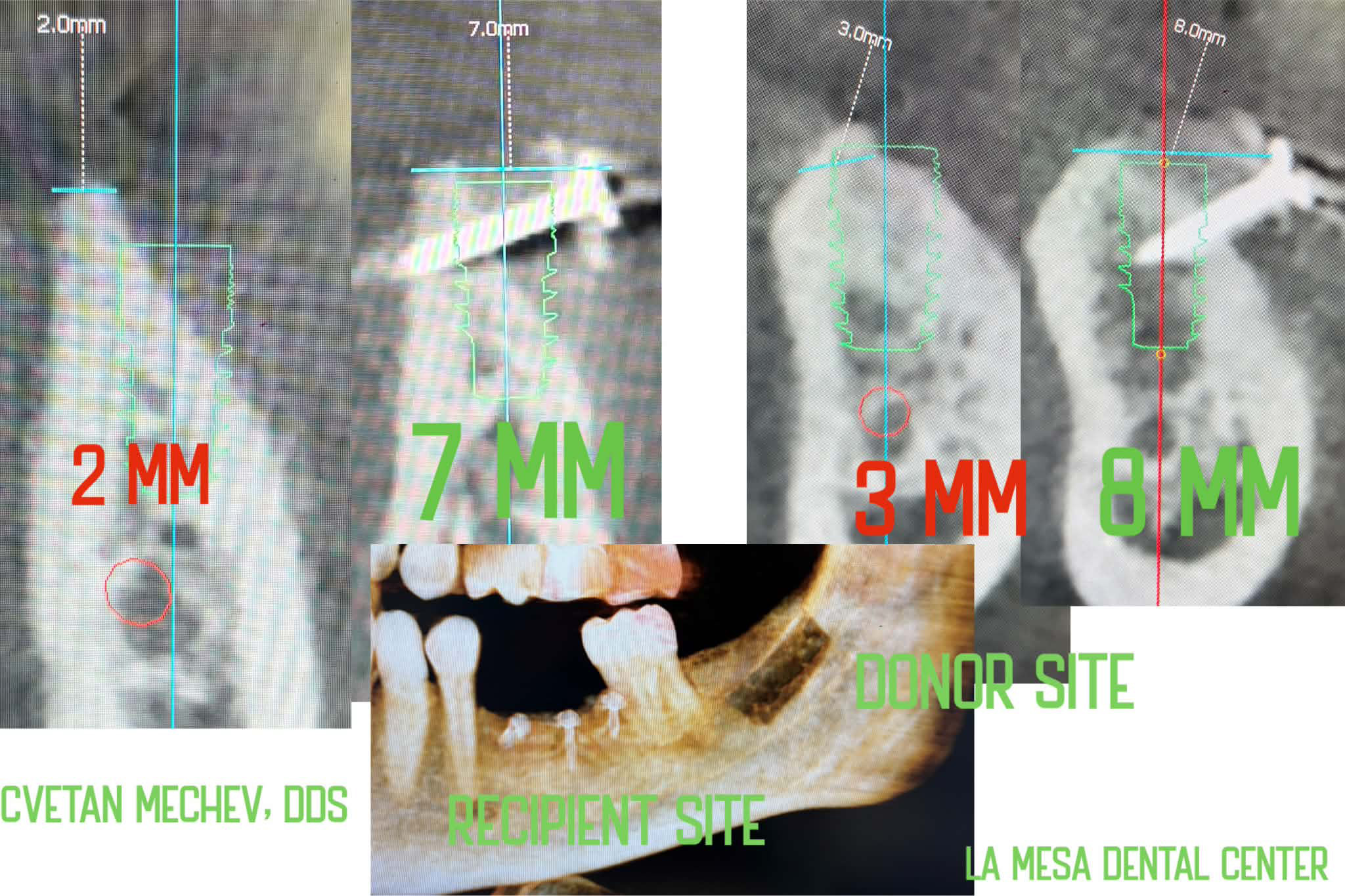
Horizontal Bone Grafting for La Mesa, El Cajon, Spring Valley, Lemon Grove, San Diego & Southern California
8334 University Ave, La Mesa, CA 91942 — patients also travel from Arizona and Nevada for Dr. Mechev’s bone grafting expertise.
Horizontal Bone Grafting FAQ
How much bone width can horizontal augmentation rebuild?
It depends on your CBCT scan, but the gains are real and documented. Case #7 rebuilt ridge width from 4 mm to 9 mm, and Case #8 rebuilt from 2.5 mm to 7 mm — both using the computer-guided Safecut technique and 100% autogenous bone.
Where does the graft bone come from?
From the area behind your lower molars. A thin block is taken with computer-guided precision, and the donor site heals fully in about 6 months. Because it’s your own bone, there is no rejection risk from donor material.
How long after the graft can my implant be placed?
The grafted site heals in 4 months. After a confirmation CBCT scan shows the new bone is solid and at least 7 mm wide, your dental implant is placed.
Do patients travel to La Mesa from outside San Diego for this procedure?
Yes. Dr. Mechev’s Safecut training in Padua and Verona, Italy is rare in the United States, so patients come from across Southern California — and even from Arizona and Nevada — for horizontal and vertical bone grafting.
Does dental insurance cover horizontal bone grafting?
Many PPO plans cover part of the cost, up to your plan’s annual maximum. Coverage varies, so call us at (619) 337-2424 and we’ll check your benefits before treatment.
Reviews